
The total experiential marketing cost in Kenya includes sound truck hire, fuel, crew allowances, MC/DJ fees, county sound permits, branding permits, and music copyright licenses (MCSK/PRISK/KAMP).
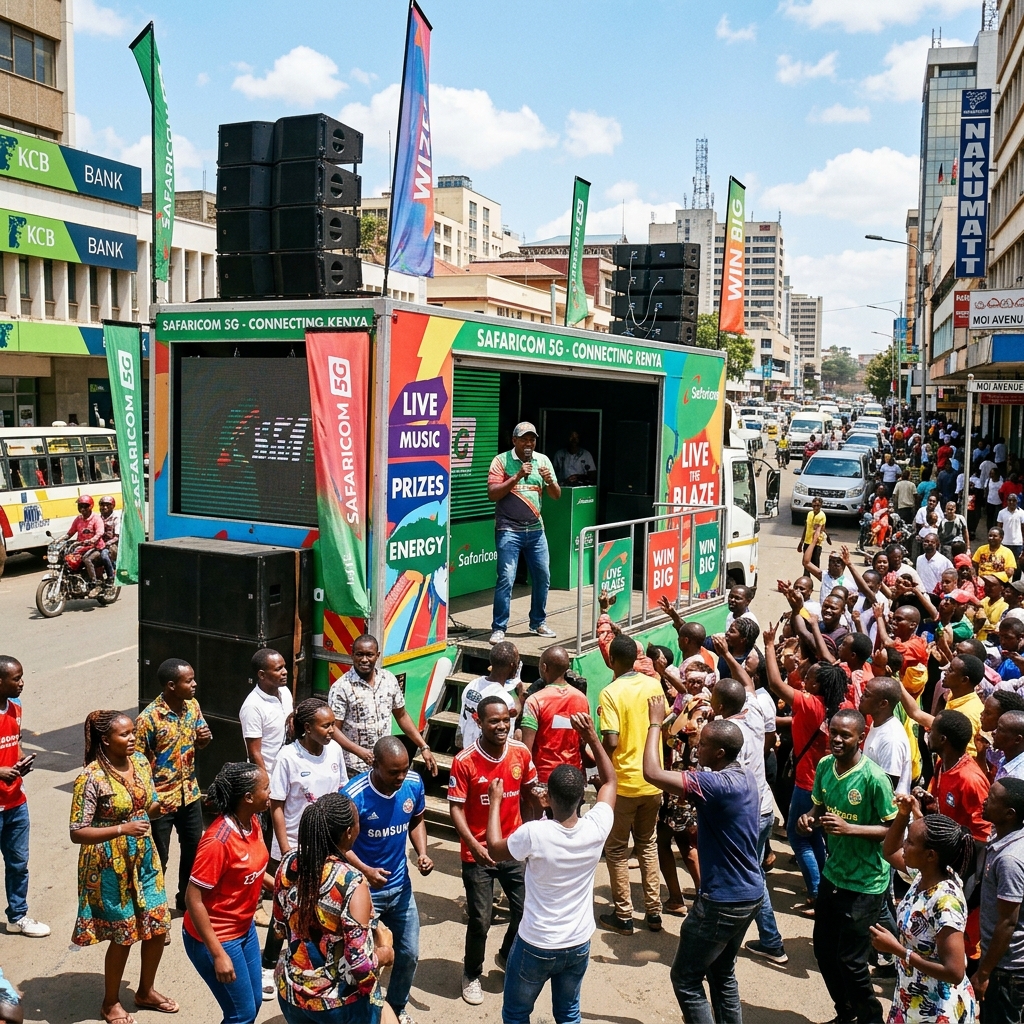
Roadshows & Experiential Marketing in Kenya
Take your message to the streets while capturing leads digitally. We run route-mapped activations across all 47 counties, providing clear pricing transparency on experiential marketing cost in Kenya and custom digital brand activation strategies.
Kenya’s consumer market is one of the most dynamic and rapidly growing in East Africa. With a growing middle class, expanding urban centers, and a large rural agricultural sector, companies face a unique challenge: how do you deliver a consistent brand message to a diverse population with varying languages, media habits, and access to technology?
While digital marketing, social media campaigns, and television advertising have expanded across the country, they often fail to connect with consumers at the grassroots level. This is where physical, face-to-face engagement becomes essential.
For brands looking to build lasting relationships, launch new products, or educate communities, professional Roadshows services in Kenya provide the ultimate marketing channel. By bringing the brand message directly to local markets, shopping centers, and transport hubs, roadshows turn abstract marketing concepts into memorable, real-world experiences.
Why Roadshows Services in Kenya are Critical for Modern Brands
Traditional media channels (print, radio, and television) and digital campaigns are effective for broad awareness, but they struggle to drive direct, high-intent action at the retail level. Here is why investing in professional Roadshows services in Kenya is a strategic necessity for brands looking to establish a strong market presence:
Benefits Of Roadshow Services
1. Unmatched Grassroots Reach (Rural & Peri-urban)
2. Direct Consumer Interaction & Product Demos
3. Immediate Feedback & Lead Capture
4. Overcoming Literacy & Digital Connectivity Gaps
Deep Penetration into Rural and Peri-Urban Markets
A significant portion of Kenya’s population resides outside major cities like Nairobi, Mombasa, and Kisumu. Many of these consumers work in agriculture, informal trade (the Jua Kali sector), and local transport. These audiences may have limited internet access or choose to bypass digital ads.
Mobile roadshows allow brands to visit smaller trading centers and markets across counties like Nakuru, Uasin Gishu, Kakamega, and Meru, ensuring that no potential customer segment is left out.
High Emotional Engagement and Trust Building
In the Kenyan market, consumer trust is built through personal interaction. Seeing a product demonstrated live, tasting a new food brand, or speaking directly to a representative builds far more credibility than a static banner ad or a 30-second radio spot. Roadshows humanize brands, giving them a friendly, approachable face.
The Offline-to-Online Bridge
Modern roadshows do not operate in isolation; they serve as a physical bridge to digital platforms. During a roadshow activation, brands can encourage participants to register for services via USSD codes, download mobile apps, or follow social media pages in exchange for merchandise or entry into a raffle. This turns temporary ground engagement into long-term digital relationships.
Also Read: Roadshow Services in Nakuru for the KDIC
Core Components of Successful Roadshows Services in Kenya
Executing a successful roadshow involves far more than simply hiring a truck and playing loud music. It requires an organized mix of logistics, talent, compliance, and media coordination. When partnering with an agency providing Roadshows services in Kenya, look for capabilities in the following areas:
A. Sound Trucks and Fleet Logistics
The mobile activation rig is the centerpiece of the campaign. Rigs must be mechanically reliable, professionally branded, and equipped with high-quality audio equipment.
| Equipment Type | Technical Specifications | Operational Role |
| Stage Trucks / Flatbeds | 10-to-15 ton custom rigs with hydraulic fold-out stages. | Serves as the main stage for MCs, performers, and product demonstrations. |
| High-Decibel Sound Systems | Professional outdoor speakers, mixers, and microphones. | Ensures the presenter’s voice and music carry clearly across busy market centers. |
| Power Generation | Heavy-duty, low-noise diesel backup generators. | Provides stable, uninterrupted power for sound, lighting, and screens without relying on local power grids. |
| Support Vehicles | Lead cars, staff vans, and merchandise supply trucks. | Manages logistics, transport for team members, and distribution of promotional items. |
On-Ground Talent and Hype Squads
The energy of a roadshow depends entirely on the crew running the stage. A standard activation team includes:
- Professional MCs (Masters of Ceremonies): Hype specialists who can speak both Swahili and local vernacular languages, keeping the crowd engaged while delivering key brand messages.
- Dancers and Entertainers: Dancers perform high-energy routines to draw crowds in busy areas, preparing them for the educational or sales segments.
- Brand Ambassadors (BAs): Trained promoters who move through the crowd, distribute brochures, demonstrate products, and collect consumer data.
County Permitting and Regulatory Compliance
Operating a mobile caravan across Kenyan counties requires strict adherence to local laws. Agencies providing Roadshows services in Kenya must manage:
- County Branding & Noise Licenses: Permits from each target county government to run mobile advertisements and play music in public spaces.
- NEMA Compliance: Working within noise levels set by the National Environment Management Authority (NEMA) to avoid fines or delays.
- MCSK & KAMP Licenses: Music copyright permits to play local and international music during activations.
- Traffic & Security Coordination: Working with local police and administration (chiefs and county askaris) to manage crowds and ensure safety in busy areas.
Step-by-Step Strategic Roadmap for Executing Roadshows
JSP Marketing uses a structured, five-phase process to plan and run successful roadshow campaigns:
Phase 1: Research and Audience Profiling
Before launching, we define the target audience and campaign goals. Are we targeting retail traders, farmers, university students, or corporate clients? Understanding the target audience determines the tone of voice, language choice, and promotional items used.
Phase 2: Route Mapping and Demographic Targeting
We map out paths to target locations with high foot traffic, coordinating stops with local market days. For example, a campaign targeting agricultural inputs is scheduled to visit rural markets in Central or Rift Valley regions on their respective main market days.
Phase 3: Production and Branding
This phase involves wrapping vehicles, printing banners, preparing promotional merchandise (such as T-shirts, caps, and flyers), and training brand ambassadors on the campaign’s key messages.
Phase 4: Active Run and Public Engagement
The caravan hits the road. The crew runs scheduled activations throughout the day, conducting product demonstrations, Q&A sessions, and interactive games to build engagement and capture customer leads.
Phase 5: Lead Capture and Data Analysis
We compile customer registrations, direct sales figures, and social media metrics to evaluate campaign performance. This data provides clear insights into the project’s return on investment.
Media Convergence: Amplifying the Ground Reach
To maximize the impact of a physical roadshow, JSP Marketing uses a media convergence model. By combining ground activations with radio, television, and digital platforms, we amplify the message far beyond the physical location of the caravan.
┌────────────────────────┐
│ National Media │
│ Radio, TV, Streaming │
└───────────┬────────────┘
│
▼
┌───────────────────────┐ ┌───────────────────────┐
│ On-Ground Roadshow │◄───────────►│ Digital Marketing │
│ Convoy & Live Event │ │ USSD, Social, Apps │
└───────────────────────┘ └───────────────────────┘
1. Radio and TV Partnerships
Radio remains a primary source of information for millions of Kenyans. Partnering with leading vernacular and national radio stations allows presenters to share live updates from the roadshow, encouraging listeners in upcoming towns to attend.
2. Social Media Amplification
Using live streams on platforms like Facebook, TikTok, and YouTube allows online audiences to follow the roadshow. We run digital contests alongside the physical events to boost online engagement.
3. SMS and USSD Campaign Integration
We use bulk SMS and USSD platforms to message registered users in target locations before the caravan arrives, sharing the schedule and driving attendance.
Measuring the ROI of Roadshows Services in Kenya
Experiential campaigns require clear metrics to measure success. JSP Marketing evaluates campaigns using:
- Direct Sales Volume: Measuring the value of products sold directly from the roadshow trucks during the campaign.
- Lead Generation Metrics: Tracking the number of new user accounts opened, USSD sign-ups, or contact forms collected by brand ambassadors.
- Brand Recall and Sentiment: Conducting post-campaign surveys in target areas to measure shifts in brand awareness and consumer trust.
- Media Impressions: Measuring the reach of live radio mentions, TV news clips, social media views, and streaming engagement.
Watchout for:
- Roadshow Marketing In Kenya
- Roadshow Companies In Kenya
- Brand Activation Services Nairobi
- Product Launch Agencies Nairobi
- Mall Activations In Kenya
- Campus Activations In Kenya
- Roadshow Trucks For Hire In Kenya
- Promotional Roadshows Kenya
- Corporate Event Organizers In Nairobi
FAQ
Questions about this service.
Here are some common questions answered specifically for this service.
We implement digital brand activation strategies by placing custom QR codes and WhatsApp triggers on our roadshow trucks. Passersby scan them to receive instant SMS offers, enter direct contests, or request digital proposals.
Our logistical team covers all 47 counties, regularly running BTL activations through Nairobi, Rift Valley, Western, Mt. Kenya, and Coast regions.